If your carbon monoxide alarm is going off, or you smell gas, get out of the house now and call 911 from outside. Don't go back in. Everything else on this page can wait until you're safe.
On an ordinary no-heat night, the furnace has usually shut itself off for a reason.
Check three things before anyone comes out. One of them fixes it a good share of the time, and it costs nothing.
What to check in the next five minutes
Check the thermostat, the power and the filter, in that order. Each one takes under a minute, and each is a common reason a furnace won't run on a cold night. If all three are fine, the furnace has stopped itself for a reason you can't see from the outside, and that needs a technician.
The thermostat. It should be set to heat, not cool or off, and a few degrees above the current room temperature. If it takes batteries, change them. A thermostat with dying batteries can still show a display and not call for heat.
The power. There's almost always a plain-looking light switch on or beside the furnace. People flip it off by mistake, and two days later nobody connects it to the cold house. Check that first, then check the breaker panel for a tripped breaker.
The filter. Pull it out and look at it. Gray and matted with dust is your answer. A clogged filter starves the blower, the furnace overheats, and the limit switch shuts it off to protect itself. Put a clean one of the same size in, and give the furnace time to cool before it will restart.
Then there's the furnace that tries to light three times and goes quiet.
That's a lockout. The furnace tried to light, couldn't prove it had a flame, and shut itself down rather than keep putting gas through a cold heat exchanger. The shutdown itself is the furnace working as it should. A dirty flame sensor is one common cause. So is a worn ignitor, and so is the gas supply. The symptom on its own doesn't tell you which, and it isn't a job to tackle at 11pm with a flashlight.
Who do you call when your furnace stops working?
An HVAC contractor who holds a current Allen County license. Licensing here is handled by the Allen County Building Department, not the state, and its rules require a license for anyone contracting to install heating, ventilating, air conditioning or duct systems. Some run an after-hours line through heating season and charge more for it. Ask whether they cover nights, and what the call-out costs.
Tell us what's happened and we'll pass it to a local HVAC contractor. We don't send technicians ourselves, so if the house is getting dangerously cold, don't sit waiting on a callback.
Have this ready when you talk to someone. It saves a lot of back and forth.
- Heat or no heat. Whether you've got none at all, or just not enough
- What it's doing. Nothing, clicking, running then stopping, blowing cold
- Any flashing light behind the furnace panel, and how many flashes
- The make and roughly how old it is
- Who's in the house. Whether anyone there is vulnerable to the cold
That last one matters. The CDC says a baby under a year old should never be put to sleep in a cold room, because infants lose body heat faster than adults do, and that people over 65 make less heat of their own and should check the temperature in the house often in hard cold. Say who's there when you call. And if it's getting too cold for them, go somewhere warm rather than waiting on a repair.
What to do if the furnace goes out in cold weather?
Close off the rooms you're not using, open the curtains on the sunny side during the day, close them all at night, and move everyone into one room. A house loses heat slowly if you stop heating the parts nobody's in. If it's below freezing outside, open the cabinet doors under sinks on outside walls too, so household heat reaches the pipes.
The pipes are what people forget until it gets expensive.
Let the furthest faucet run at a slow trickle. That keeps water moving in the line and makes a freeze less likely. If you've got a basement or crawlspace with exposed pipes, that's usually where it happens first in Fort Wayne.
Is the house going to sit unheated for more than a day in a hard freeze? Shutting the water off at the main limits what a burst pipe can do. Properly draining and winterizing a system is more than closing one valve though, so ask a plumber if you're not sure. A burst pipe is its own repair bill on top of the furnace.
How to heat a house if the furnace goes out?
Use electric space heaters plugged straight into a wall outlet, never an extension cord or a power strip, one per circuit. The CPSC says keep them three feet clear of drapes, furniture, bedding and anything else that burns, and turn them off when you go to sleep. Wear layers and use blankets rather than trying to heat the whole house. And never use anything that burns fuel indoors.
That last rule is the one that kills people every winter. So here's exactly what it covers.
Never run a generator in a garage, a basement or near a window, even with the door open.
Never use a charcoal or gas grill indoors.
And the one people try most often, which the CDC is blunt about: never heat your house with a gas oven.
All three give off carbon monoxide, and you can't see it or smell it. The symptoms are easy to mistake for flu: headache, dizziness, weakness, upset stomach, vomiting, chest pain and confusion. Someone who's asleep can be poisoned without ever feeling symptoms.
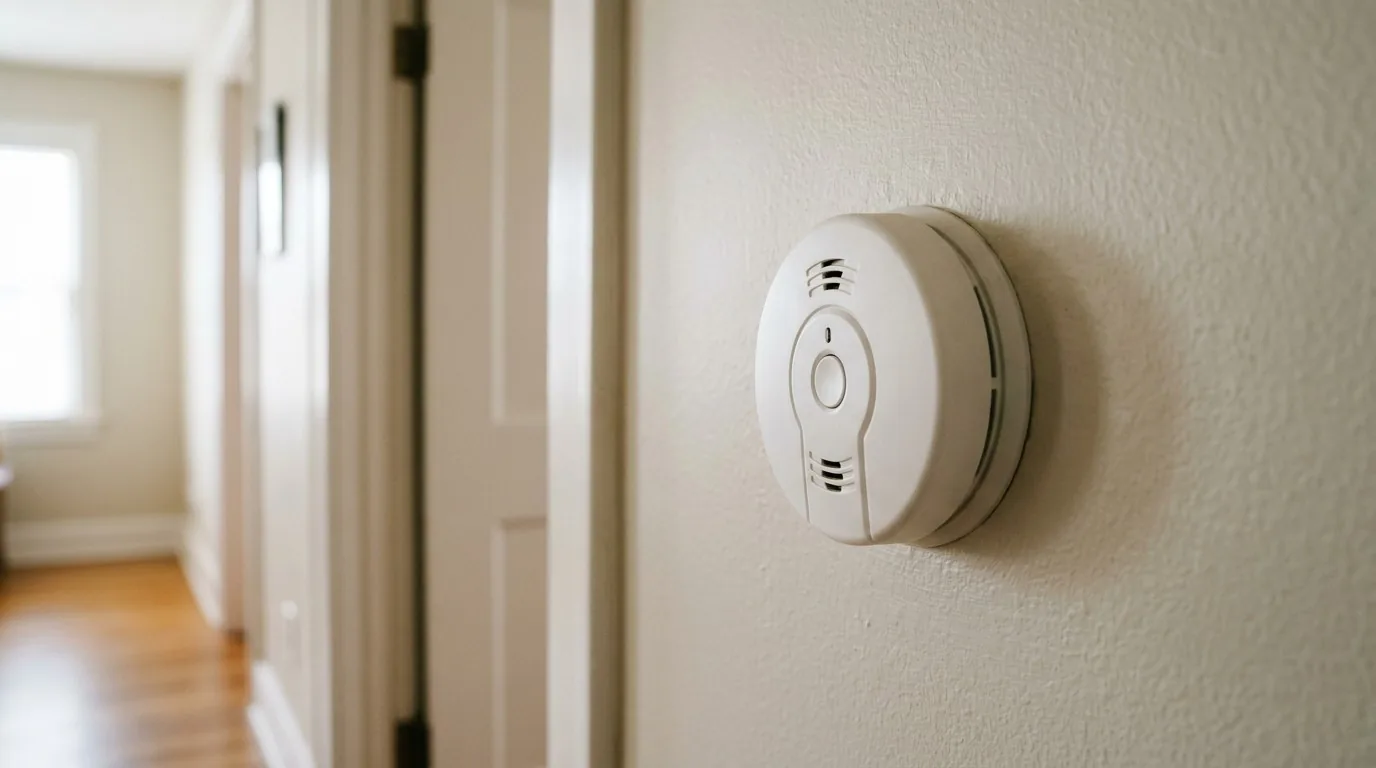
Put carbon monoxide alarms on every level of the house and outside the sleeping areas, battery-operated or with a battery backup so a power cut doesn't take them out. The CPSC says test them every month, and change the batteries yearly unless they're the sealed ten year sort. The CDC says replace the alarm itself on the manufacturer's instructions, or every five years.
If an alarm goes off, get everyone outside and call 911 from there.
What emergency work costs
After-hours, weekend and holiday calls cost more than scheduled work, and how much more is set by each company rather than by any local standard. A cold snap also puts every no-heat call in the city into the same few days, so expect a longer wait than you'd get in October. Ask what the call-out fee is before you agree to anyone coming out.
Ask two things when you book.
Is the diagnostic fee credited against the repair? Many contractors credit it, some don't, and after hours the fee's bigger either way.
Is this an overtime rate, and when does the normal rate kick back in? If the house is holding a safe temperature and the problem isn't dangerous, ask what the same job costs in normal hours.
If it's not holding, or anyone in the house is vulnerable, don't wait.
What furnace repair costs in Fort Wayne covers the ranges by part.
Questions people ask
How long does emergency furnace repair take?
A simple problem is often quick to fix. A flame sensor clean, an ignitor swap or a filter change takes under an hour once the tech is standing in front of the furnace. Something that needs testing, or a part nobody stocks, takes longer.
The waiting is the long part, because the cold that stopped your furnace stopped other people's too. If a part has to be ordered, expect a second visit. Ask for a time window when you book, rather than just agreeing to today.
What should I ask before I hire someone for emergency furnace repair?
Ask whether they hold a current Allen County HVAC license, what the after-hours call-out fee is, whether the diagnostic is credited against the repair, and whether they stock parts for your make of furnace.
Ask the tech to show you the failed part and explain why it failed. If you're told the heat exchanger is cracked, ask to see it, and get a second opinion before you agree to replace the furnace.
Do I need to be home for emergency furnace repair?
Yes, for a repair visit. Someone needs to let the technician in, show them the furnace and the thermostat, and approve the work once the problem is found. You'll also hear the explanation firsthand instead of secondhand.
If you can't be there, have someone there who can authorize spending money, because the tech won't start on a quote nobody's accepted.
Will a furnace restart by itself after it locks out?
Sometimes, but don't count on it. Many furnaces retry after a set period, often an hour, and some run a while before locking out again.
Switching it off and on at the wall switch clears the lockout on many of them. Don't do that over and over to force another light, though. Every attempt sends more gas through a furnace that has already failed to burn it. A furnace that keeps recovering and failing is telling you a part is going, so get it looked at.
Sources
- Centers for Disease Control and Prevention, about carbon monoxide poisoning
- Centers for Disease Control and Prevention, preventing hypothermia
- US Consumer Product Safety Commission, winter heating safety, 23 January 2026
- Allen County Building Department, Contractor Licensing
- US Department of Energy, energy conservation standards for consumer furnaces
Last updated